

Professional Tiling Guide
How To Tile Heavy Use & Commercial Floors (By BAL Adhesives)
Tiling heavy use and commercial floors requires a very different approach compared to standard domestic projects. From tile selection to adhesives and grout choice, every stage must be carefully planned to ensure long-term durability, safety and performance.
Whether you’re working on a retail space, office, restaurant or other high-traffic environment, following best-practice guidance from BAL Adhesives will help you achieve a robust, professional finish built to withstand constant use.
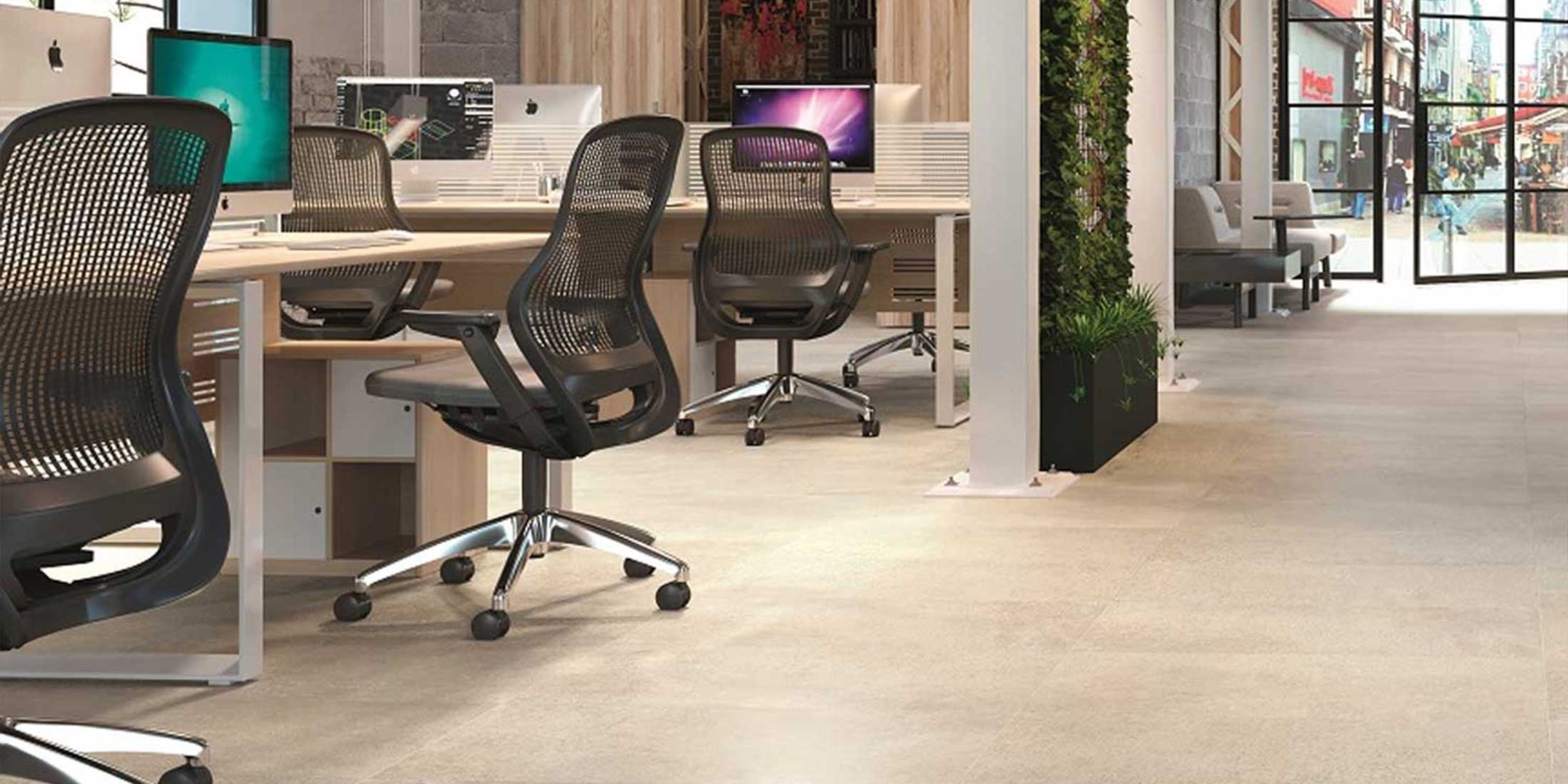
Step 1 – Ensure Your Tiles Are Suitable
Not all tiles are suitable for heavy use or commercial environments. Durability is critical, so it’s essential to choose tiles that can withstand high footfall, wheeled traffic and frequent cleaning.
Recommended tile types for heavy use areas:
- Porcelain tiles
- Terrazzo tiles
- Quarry tiles
- Quartz and granite tiles
Slip resistance is equally important. The higher the risk of spills or moisture, the greater the need for tiles with a high slip-resistance rating. Always confirm with the tile manufacturer that the product is suitable for heavy use and commercial flooring applications.
Step 2 – Background Preparation
Correct background preparation is absolutely crucial when tiling heavy use and commercial floors. Any weaknesses in the subfloor will be magnified over time due to constant traffic and loading.
Ensure all backgrounds are clean, dry, sound and free from dust or contaminants. Floors must also be flat and level, meeting SR1 surface regularity — defined as a maximum deviation of ±3mm over a 2m straight edge.
Why SR1 matters
SR1 tolerances help prevent lipping, ensure full adhesive contact and reduce the risk of tile failure in high-traffic commercial environments.
Step 3 – Use The Correct Uncoupling Systems
If an uncoupling system is required, it must be suitable for heavy use and commercial floors. Some uncoupling systems are designed only for lightweight or domestic applications and may fail under sustained traffic.
BAL Rapid-Mat
A thin, lightweight uncoupling mat designed to handle high traffic levels while reducing stress between the tile and substrate.
BAL Flexbone Varied Bonded Mat
A robust uncoupling solution recommended for highly trafficked and demanding commercial environments.
Step 4 – Selecting The Right Tile Adhesive
Adhesive selection must suit the background, tile type and environmental conditions. Consider whether a rapid-setting or slow-set adhesive is required, especially where fast-track installation is needed.
BAL Pourable One
BAL Pourable One is ideal for commercial floors due to its improved strength and flexibility. Its pourable consistency makes it easier to tile large floor areas efficiently in a single operation.
Rapid-setting adhesives are particularly useful in commercial projects where downtime must be kept to a minimum, allowing floors to be grouted and brought back into service quickly.
Step 5 – Choose The Correct Grout
A hard-wearing, abrasion-resistant grout is essential for heavy use and commercial flooring. The grout must withstand constant foot traffic, cleaning regimes and environmental stresses.
BAL Micromax3
Ideal for most commercial projects, offering strength, flexibility, water and frost resistance, plus Microban® antimicrobial protection.
BAL Grout Flex & Grout Flex Wide Joint
Polymer-modified flexible grouts designed to cope with movement and heavy foot traffic.
BAL Easypoxy AG (Epoxy Grout)
Perfect for food preparation, storage and hygiene-critical environments. Waterproof, chemical-resistant and highly abrasion resistant.
Frequently Asked Questions
What tiles are best for commercial and heavy use floors?
Porcelain, terrazzo, quarry tiles, quartz and granite are all excellent choices due to their durability, low porosity and resistance to wear.
Why is SR1 surface regularity important?
SR1 ensures a flat surface, reducing tile lipping and improving adhesive coverage, which is critical for long-term performance in high-traffic areas.
When should epoxy grout be used?
Epoxy grout is recommended for commercial kitchens, food storage areas and environments requiring superior hygiene, chemical resistance and durability.


